


Services

Brain Spotting
Where you look? How you feel?
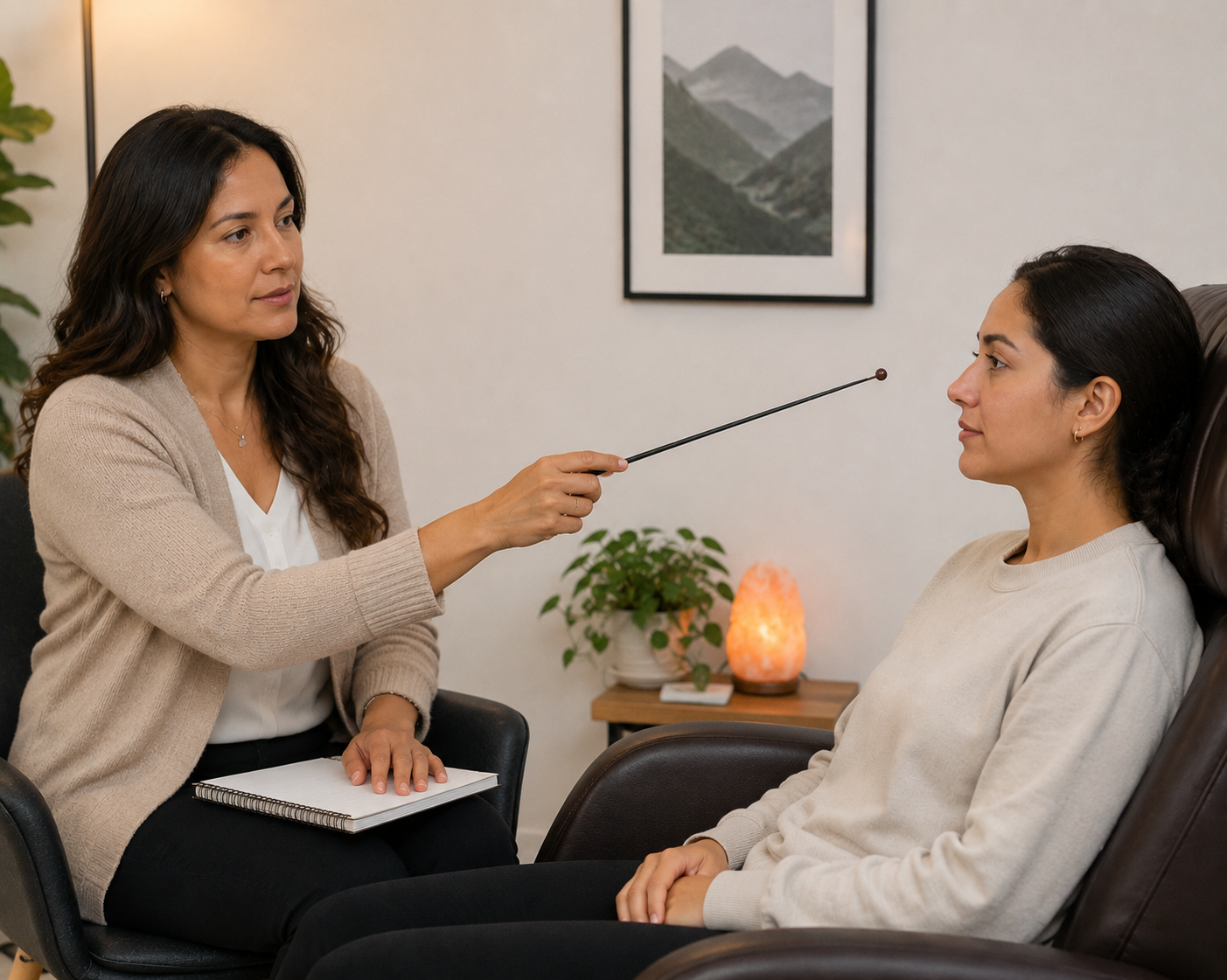
Brainspotting taps into the brain's subcortical, or the deep brain regions located beneath the cerebral cortex, and emotional processing center to locate, process, and release trauma, allowing for deep healing. This is done by a therapist who has a client focusing on a pointer while covering different deep emotions, memories, or events, while simultaneously identifying where the client's eyes naturally focus when distress is highest and also identifying the client's bodily movements and sensations when discussing these different deep emotions, memories, or events. This all works as Brainspotting bypasses the conscious by focusing on the combination of the limbic system and autonomic nervous system reaction to find "brain spots" These brain spots correlate with brain activity, allowing access to stored trauma and emotional memories that normally may not be accessible through traditional talk therapy.
Brainspotting Aftereffect
Brainspotting is generally safe but can cause intense emotional releases, physical discomfort, and temporary fatigue. Common side effects include feelings of vulnerability, fatigue, increased anxiety, vivid dreams, headaches, or muscle tension. Symptoms may last from 12 to 48 hours after Brainspotting has occurred.
Individuals
Adults & Teenagers
Life as adults can be full of responsibilities and stressors that can become overwhelming and difficult to handle, affecting our emotional well-being, sense of self-worth, and many times our relationships.
Similarly, adolescence is a period in our lives marked with many “first experiences” that can soon become overwhelming. Issues around self-esteem, identity, anger and anxiety, are only a few that can arise during these years. Therapy can become a space for both adults and teenagers to explore and improve their emotional, behavioral and relationship functioning. By improving the ways in which you navigate your feelings and interact with others, your personal life and understanding of self will also improve.
Why Brain Spotting?
Brainspotting works as an effective trauma-targeted somatic neurobiological therapy; it is considered to be effective for treating different conditions such as PTSD/C-PTSD, anxiety, depression, addiction, and general trauma/chronic pain. Brainspotting also helps lead clients to trauma recovery and improved emotional regulation, and some clients prefer Brainspotting as it works inherently differently from traditional talk therapy.
Areas we can be of help to you include:
If you’re feeling burnout, depressed and/or anxious
If you struggle with expectations (from yourself or others)
If you often sacrifice your own needs to please others
If you struggle with your sense of self-worth
If you’re experiencing issues with your peers, partner, and/or loved ones
If you feel lonely and want a safe space to share your feelings

Couples
Life in a couple (married or not) can be one of the most rewarding experiences we have through life, or it can also be one of the most challenging, or it can be both! Although talking to a therapist might not be the first option that comes to mind while trying to improve our romantic relationships, couples therapy can definitely be a catalyst to move your relationship from a place of hurting to a place of fulfillment.
Areas we can be of help to you include:
If you’re feeling disconnected from your partner (emotionally, physically and/or sexually)
If you’re going through an infidelity from you or your partner
If you’re experiencing communicating difficulties (Feeling your partner “just doesn’t get it”)
If you’d like to change the patterns of interaction with your partner
If you’d like to create an emotional bond with your partner that feels safe and secure.

Groups
Although the idea of sharing one’s personal struggles with strangers might not seem appealing at first, support groups can provide a sense of relief to participants by allowing them to hear from others with similar issues. Some of the benefits of engaging in a support group include: to get support and also to offer support to fellow group participants, to learn from others’ experiences, to improve your social skills and to increase your confidence in using your voice. In other words, sharing can be healing.
Some of the groups we currently offer include:
Parenting Support Group
Relationship Strengthening- Couples Group
Women Support Group
Teen Self-Esteem Group
Workshops & Presentations
Mental Health
Domestic Violence
Sexual Violence
Healthy Relationships
Parenting Skills